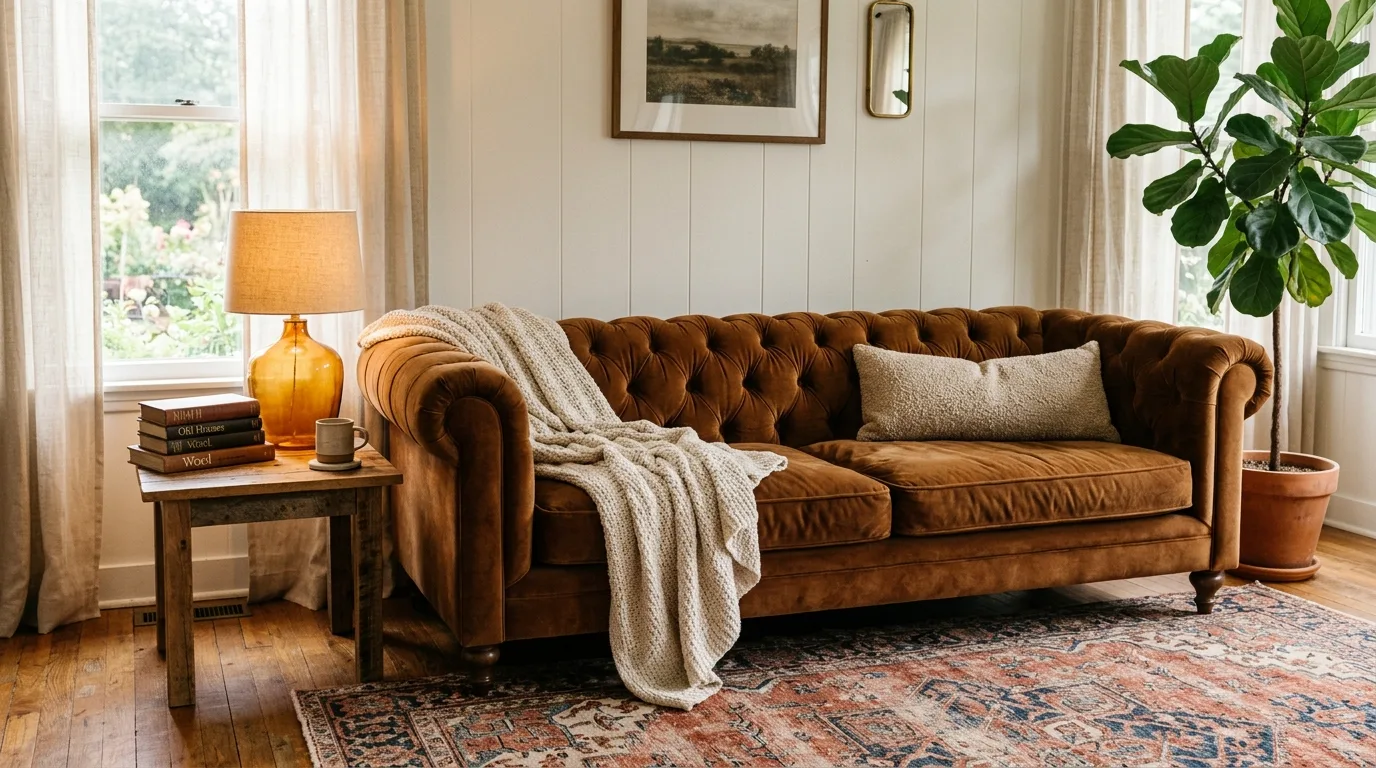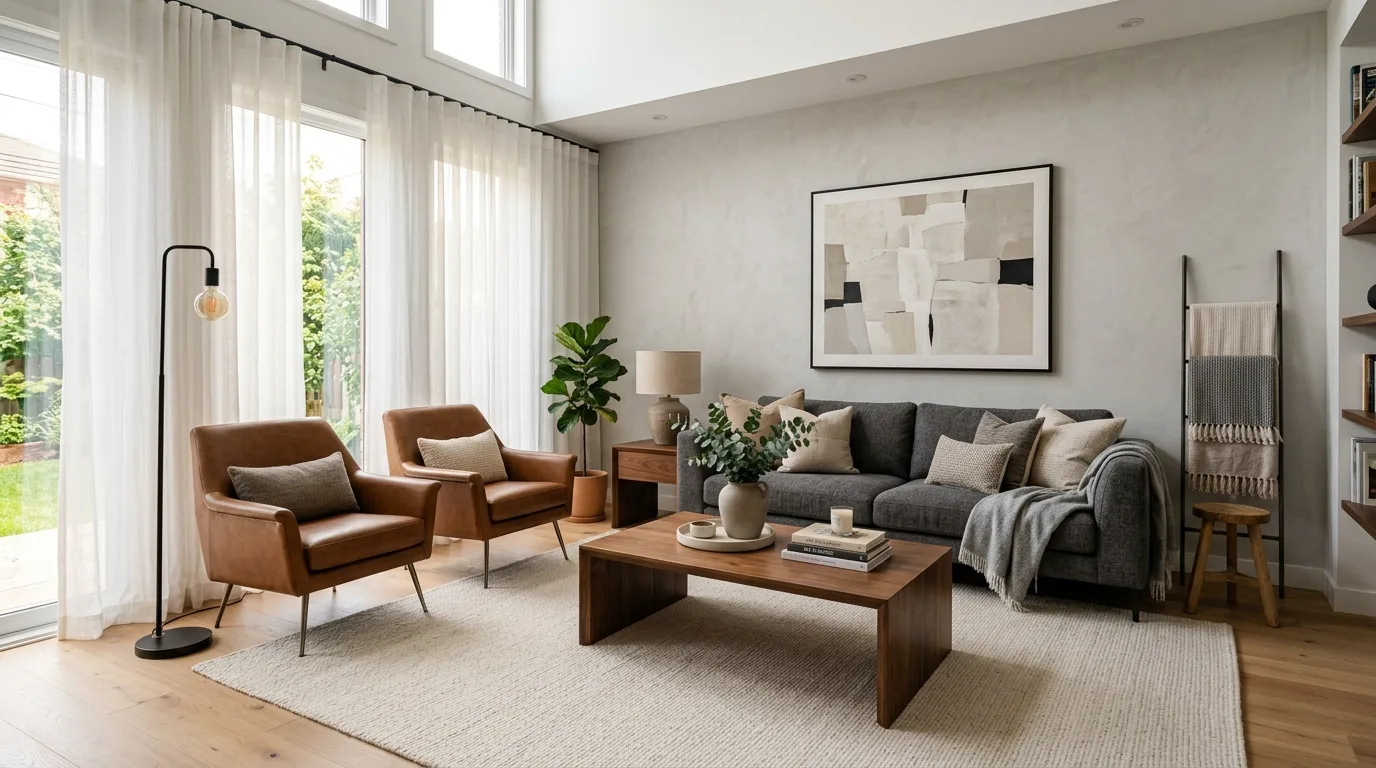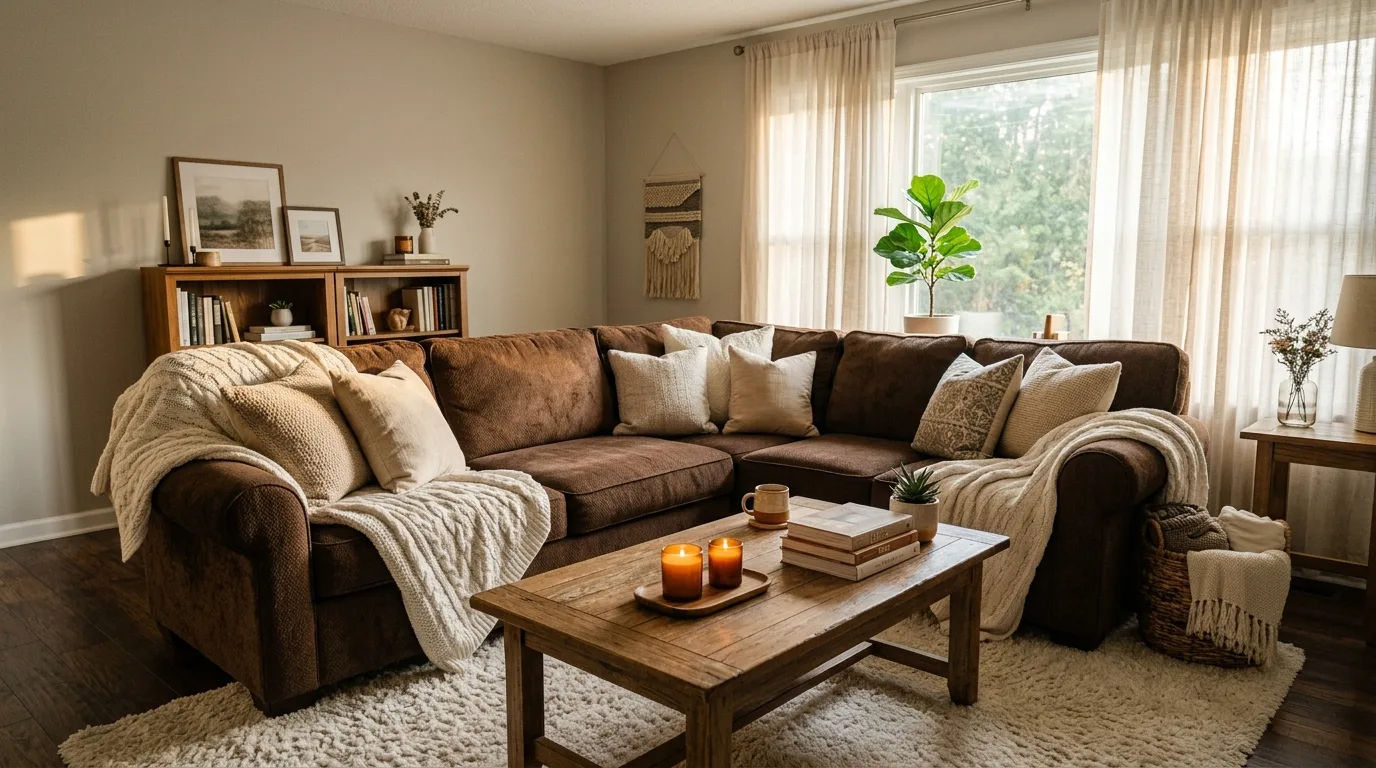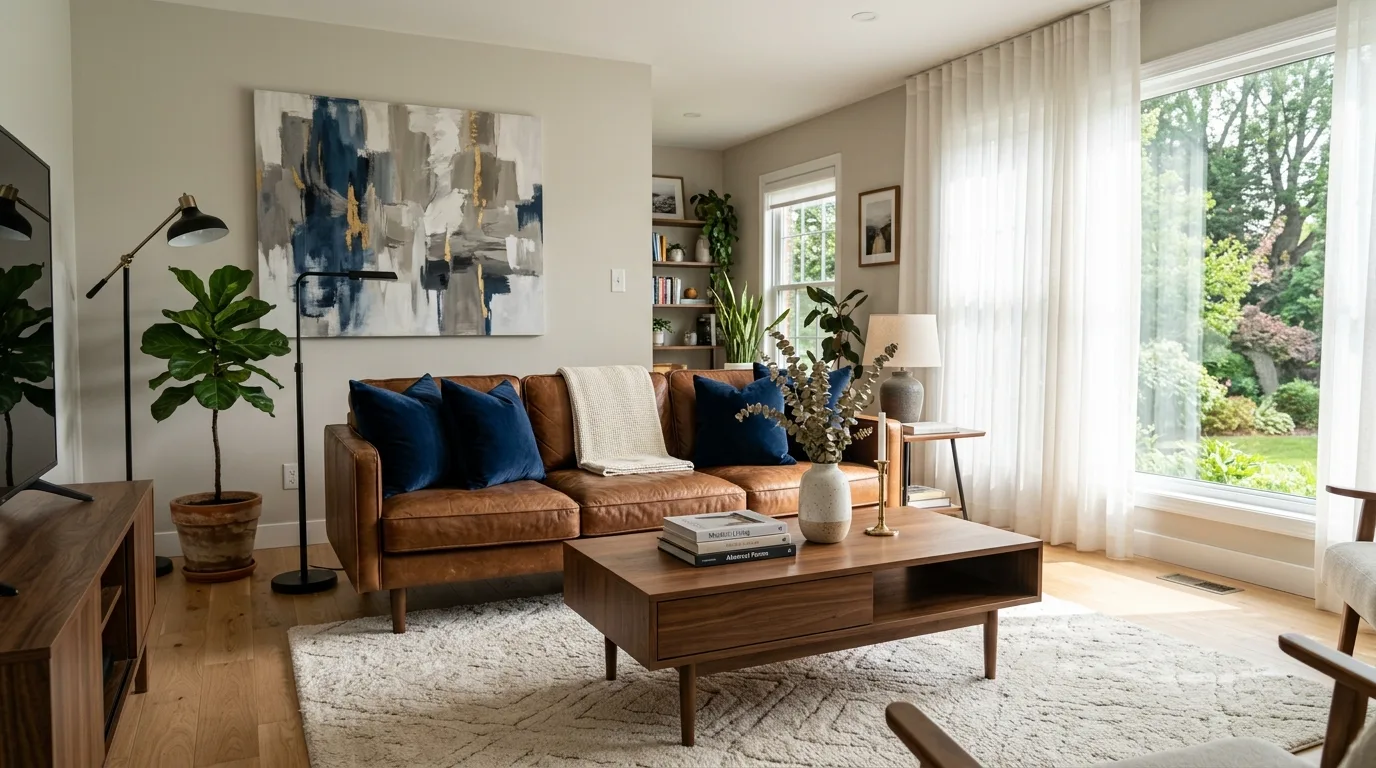
Brown and blue work so well together because one feels grounded while the other adds freshness and contrast. Whether the room leans coastal, classic, or modern, this color pairing can create a space that feels layered without becoming overwhelming.
Ideas to try
1. Navy Pillows on a Cognac Sofa
Navy pillows are one of the easiest ways to introduce blue into a brown living room because the contrast looks intentional immediately. A cognac sofa feels warmer and more tailored when navy appears through cushions, art, or a throw across the arm.
The pairing feels especially successful when cream and beige are included nearby. Those lighter tones soften the jump between blue and brown, letting the room feel designed and welcoming instead of high contrast for its own sake.
2. Slate Blue Walls With Walnut Furniture
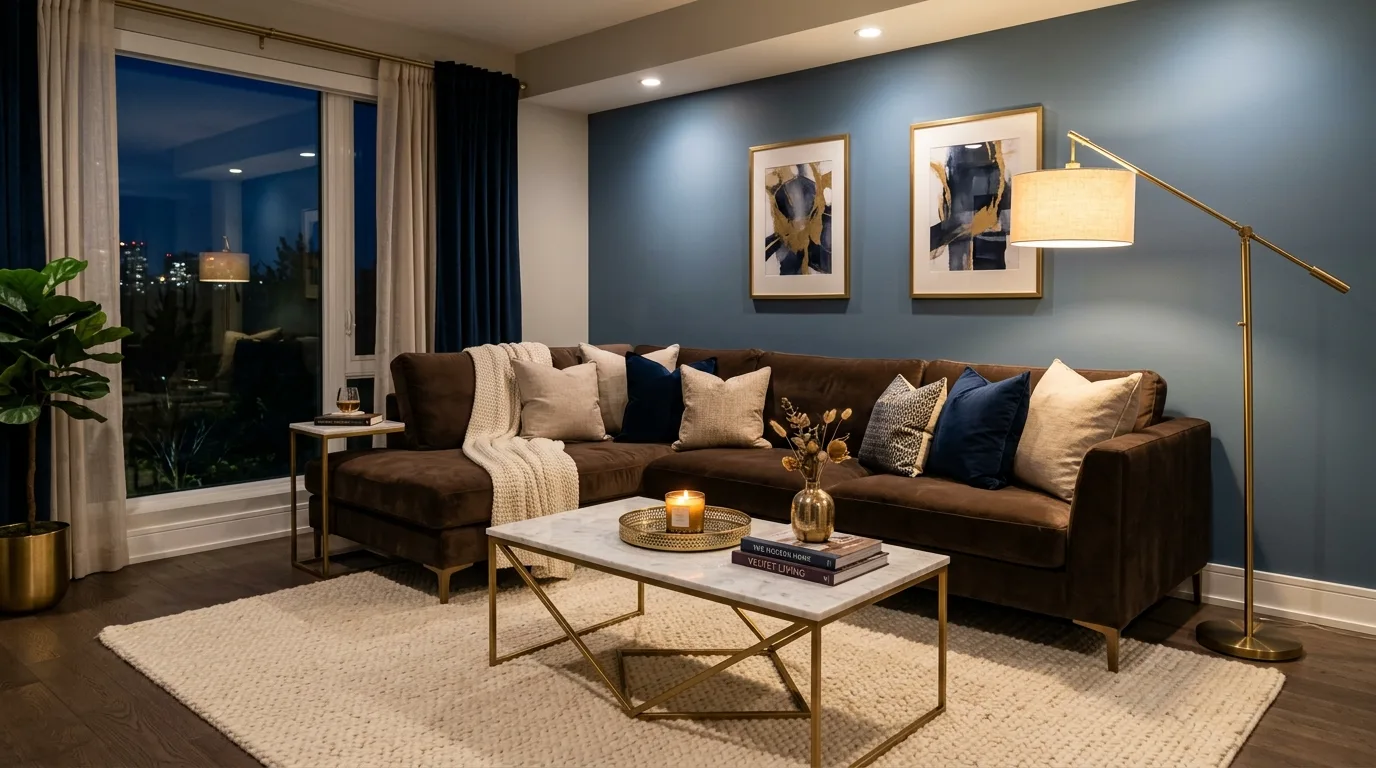
Slate blue walls create a calm envelope around walnut furniture and brown upholstery. The room feels moody in a thoughtful way, with the wood grain adding natural warmth that keeps the blue from becoming too cool or distant.
This idea works beautifully when the finishes stay matte and layered. Linen curtains, a woven shade, and a textured rug help the palette feel soft and livable, even when the wall color is fairly saturated.
3. Powder Blue and Camel for Light Contrast
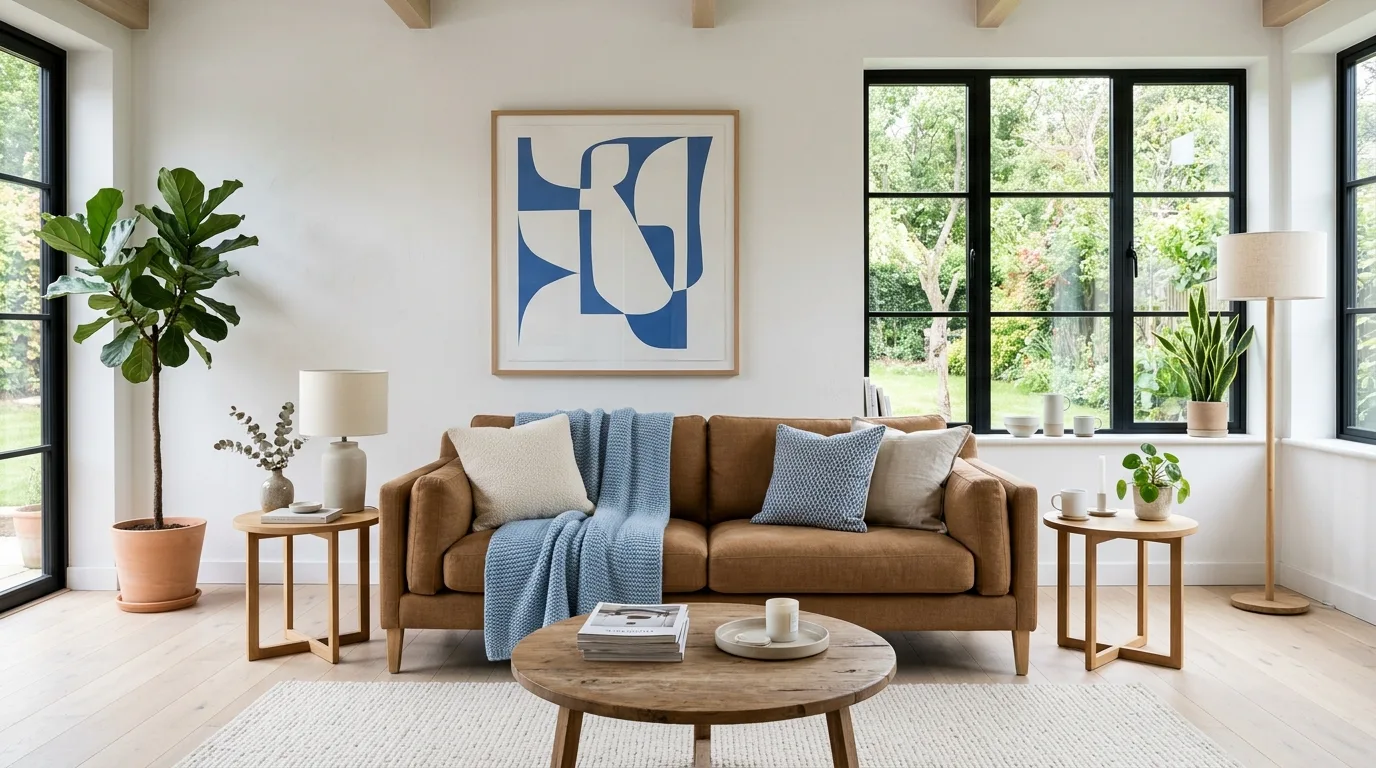
Powder blue brings a gentle freshness to camel seating, making the whole room feel lighter and more relaxed. This is a softer approach to the brown-and-blue palette, which makes it ideal for anyone who wants contrast without strong drama.
Pale oak, white trim, and a light rug support this look especially well. They keep the room bright and help the blue feel breezy while still letting the brown furnishings provide warmth and visual substance.
4. Denim Tones Around a Dark Brown Couch
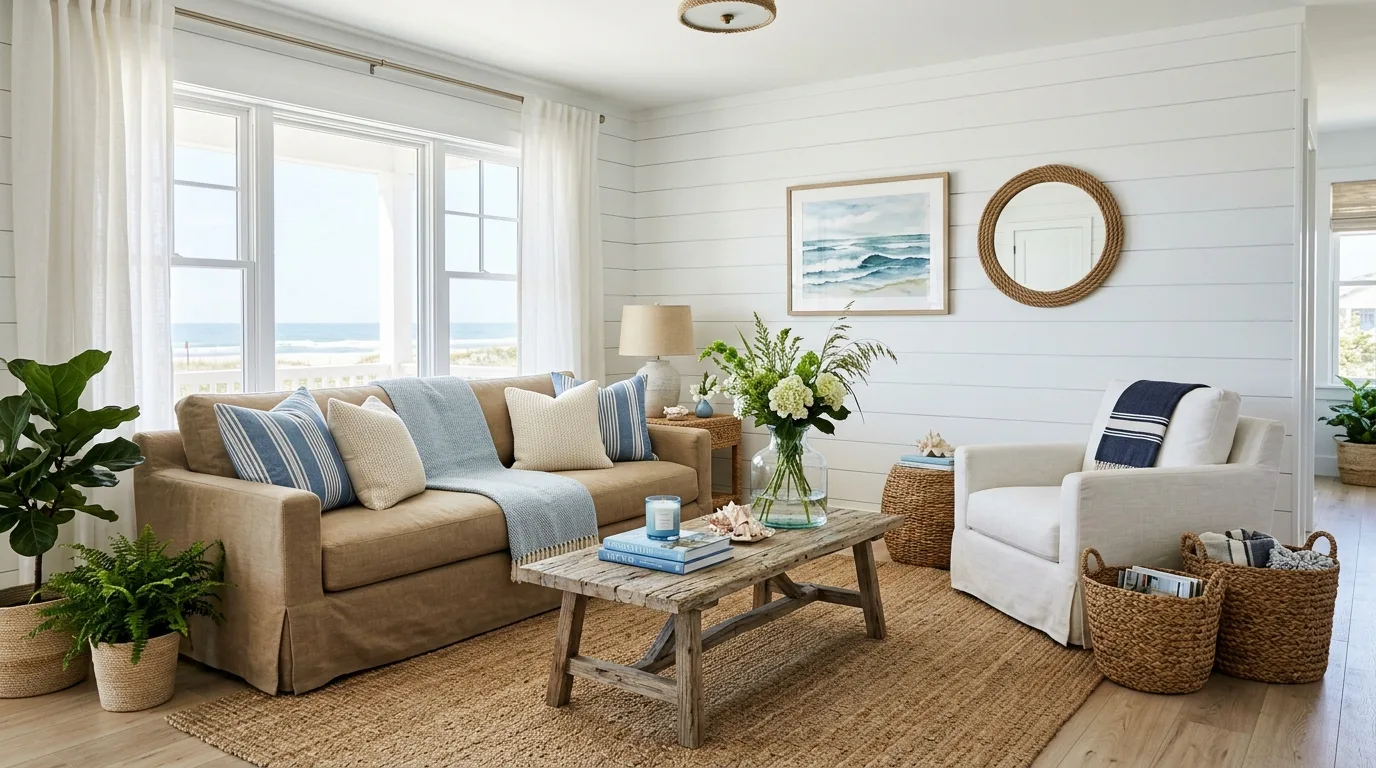
Denim blue is relaxed enough to pair beautifully with a dark brown couch. It softens the richness of the upholstery and gives the room a casual, approachable quality that works well in family spaces and everyday living rooms.
A denim-toned rug, artwork, or patterned pillows can repeat the color without making it feel overly themed. The goal is to let blue echo through the room in a way that feels easy and natural rather than too perfectly matched.
5. Blue Velvet Chairs With Chocolate Seating
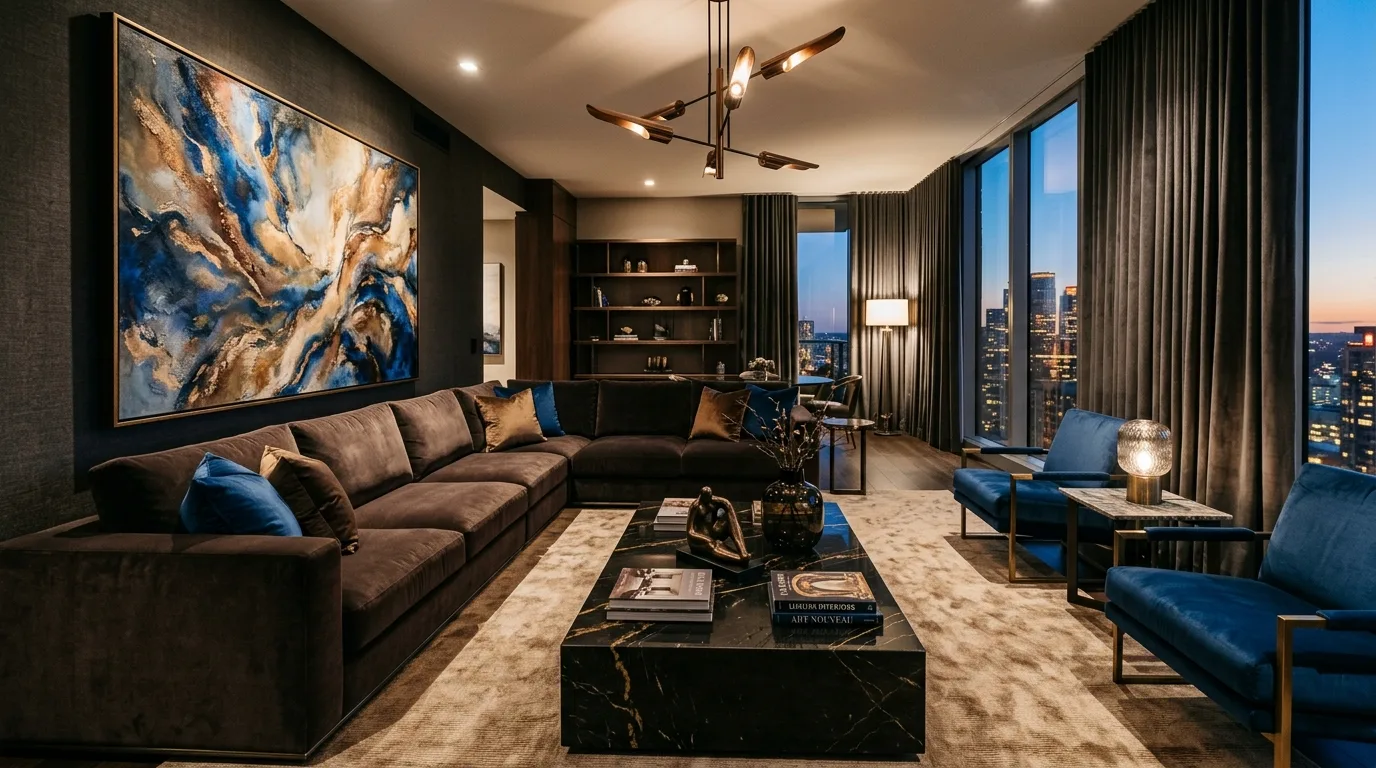
Blue velvet chairs instantly elevate a room with chocolate seating because they introduce color, shine, and a more dressed-up atmosphere. The brown keeps the composition grounded while the blue brings the visual lift.
This pairing looks strongest when the rest of the palette stays edited. A stone coffee table, brass lighting, and neutral drapery are often all you need to support the contrast and keep the room feeling polished.
6. Coastal Blue With Weathered Brown
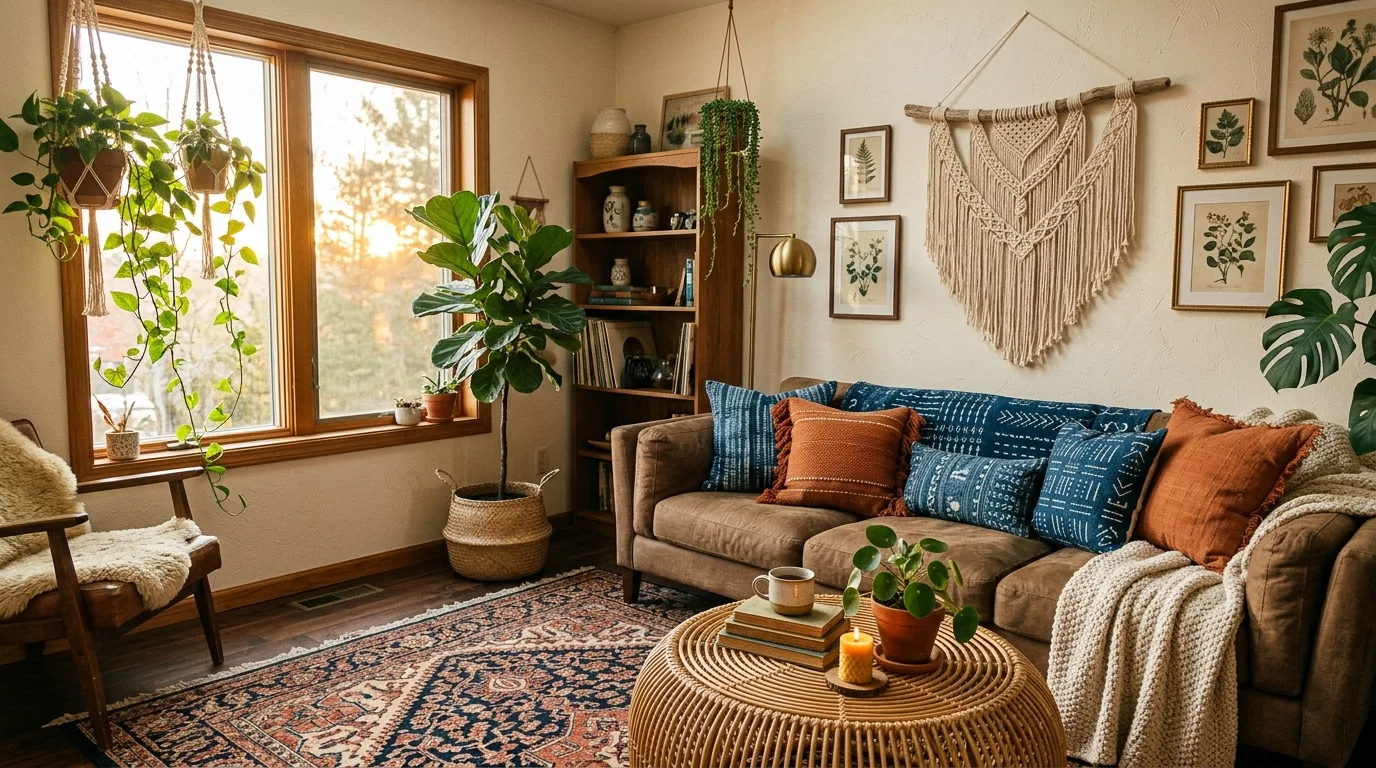
Weathered brown wood and coastal blue textiles create a living room that feels breezy but still warm. The brown prevents the palette from becoming too pale, while the blue adds the airiness that coastal interiors do so well.
This look becomes more convincing when natural texture is part of the mix. Jute, linen, rattan, and washed cotton all reinforce the easygoing mood and make the palette feel rooted in real materials.
7. Mid-Century Walnut With Teal Notes
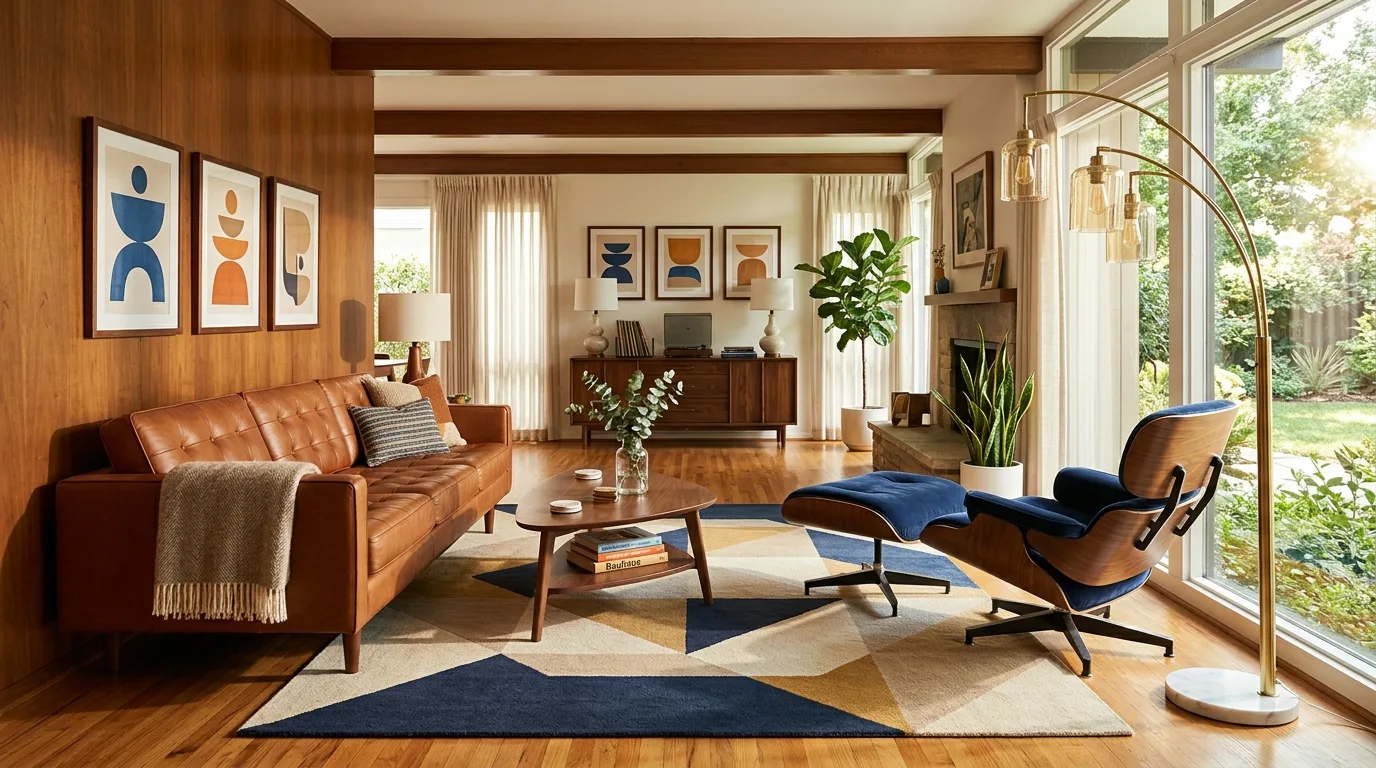
Teal is a richer route for blue in a mid-century room, especially when walnut furniture already sets the tone. The color feels bold but not loud, adding personality while still working naturally with brown leather and warm wood.
To keep the room cohesive, repeat teal in a few deliberate places rather than everywhere. One chair, a piece of art, and a pillow might be enough to make the palette feel complete without losing the calm sophistication of the room.
8. Blue Art Above Brown Upholstery
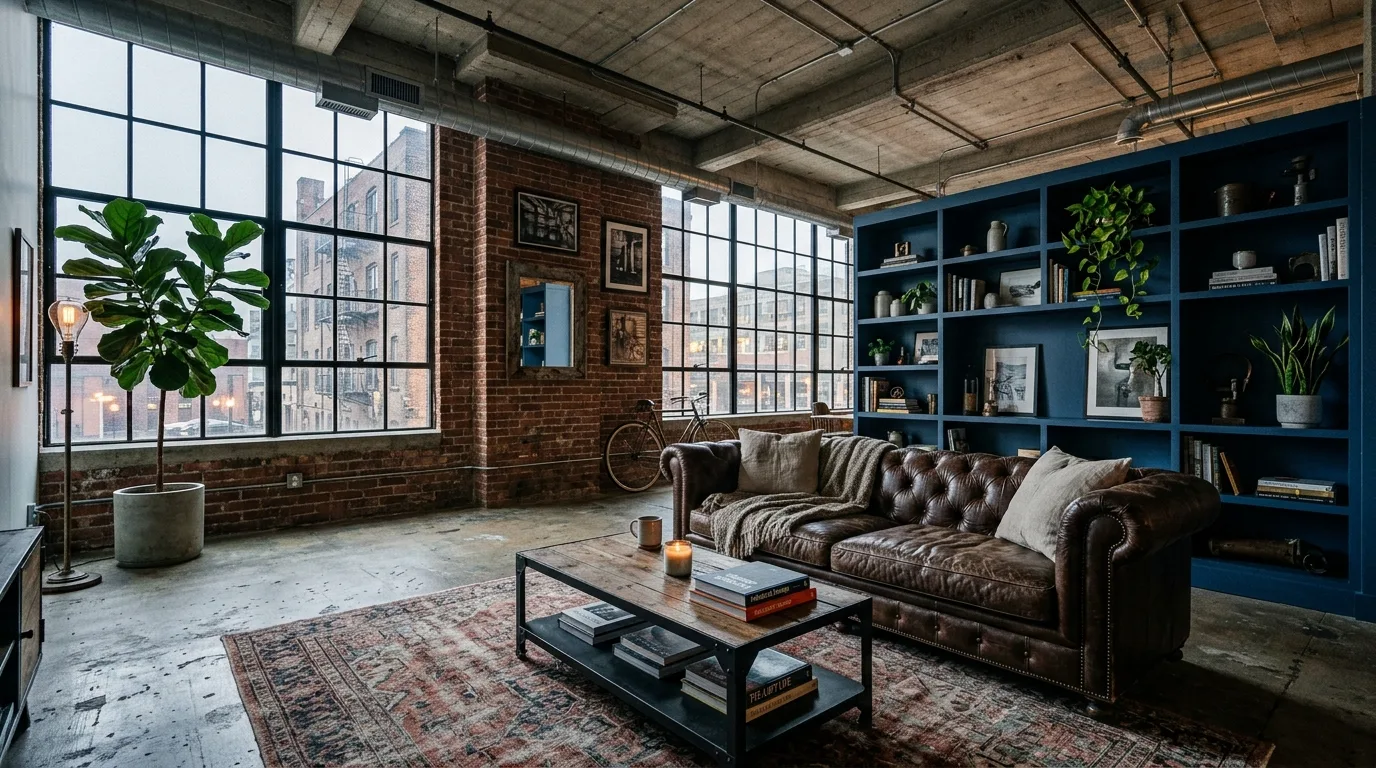
Oversized blue artwork is a smart way to balance brown upholstery because it pulls the eye upward and gives the room a clearer focal point. Even a simple brown sofa starts to feel more styled when blue appears in a larger visual gesture above it.
This is especially effective if you do not want to commit to lots of blue furniture or textiles. The art supplies the contrast, while the rest of the room can stay neutral, textured, and easy to update over time.
9. Brown Leather With Dusty Blue Drapes
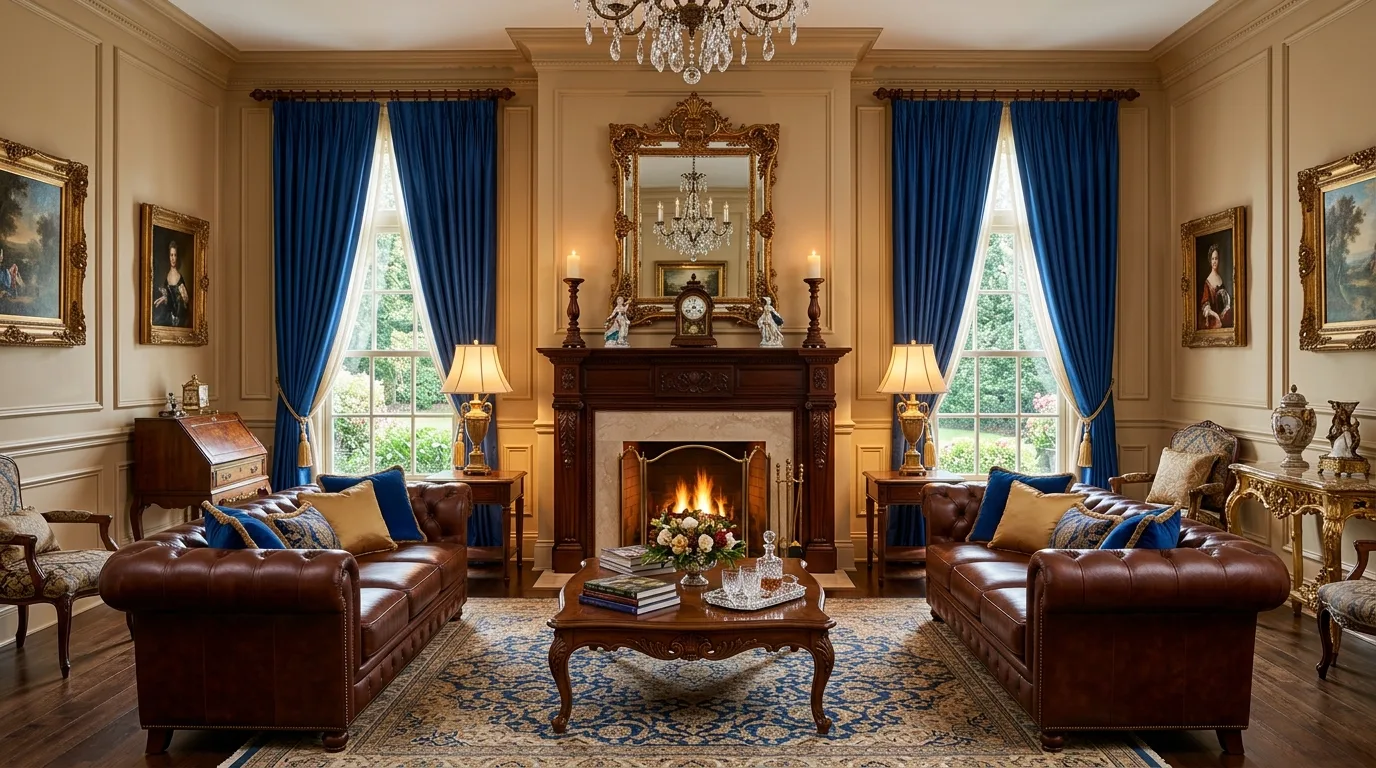
Dusty blue drapes bring softness and height to a room with brown leather seating. The palette feels more romantic and layered than a sharper navy-and-brown combination, which makes it a lovely choice for more traditional or transitional spaces.
When the drapes fall all the way to the floor and the leather has some patina, the room gains a quiet elegance that looks collected rather than staged. A patterned rug can help tie the tones together beautifully.
10. Charcoal Blue and Brown in a Moody Layout
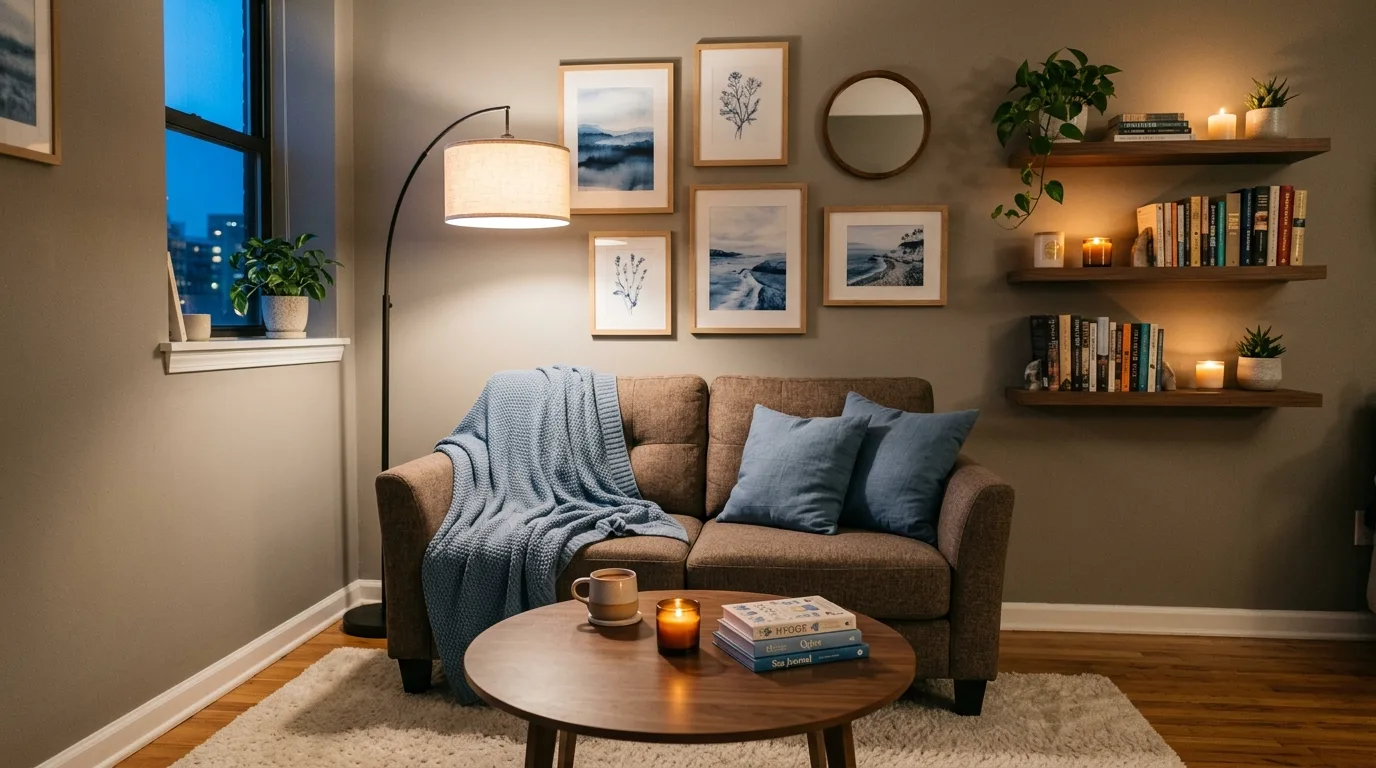
A charcoal-blue backdrop gives brown furniture a dramatic stage without losing warmth. The deeper blue feels architectural and enveloping, while the brown pieces prevent the mood from becoming too cool or severe.
Warm lamps, bronze finishes, and a pale rug are especially important in a darker version of this palette. They bring back enough softness and light so the room feels atmospheric and inviting rather than closed in.