Red and blue are full of energy, but they can still feel stylish when the room is designed with balance in mind. These ideas show how to use strong color in a boys bedroom while keeping the space comfortable, imaginative, and easy to grow with.
Ideas to try
1. Navy Base With Bright Red Pops
Using navy as the base color gives the room structure, while bright red accents add the burst of fun that keeps the space feeling lively. This setup is especially effective when the red appears in bedding, art, or a chair rather than on every surface.
Because navy is grounding, it helps the brighter details feel organized instead of chaotic. The room stays energetic, but it also feels pulled together enough to last beyond a single trend or age phase.
2. Color-Blocked Walls for Playful Impact
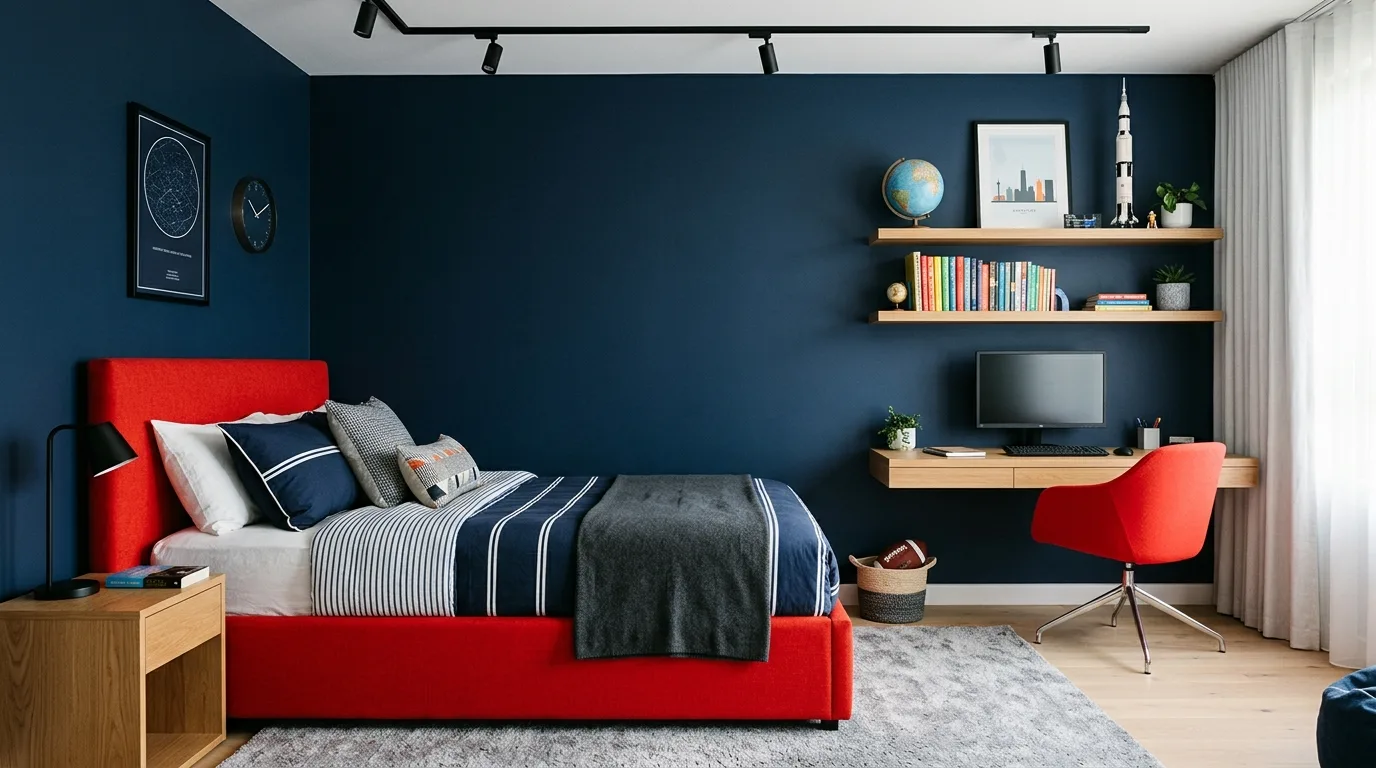
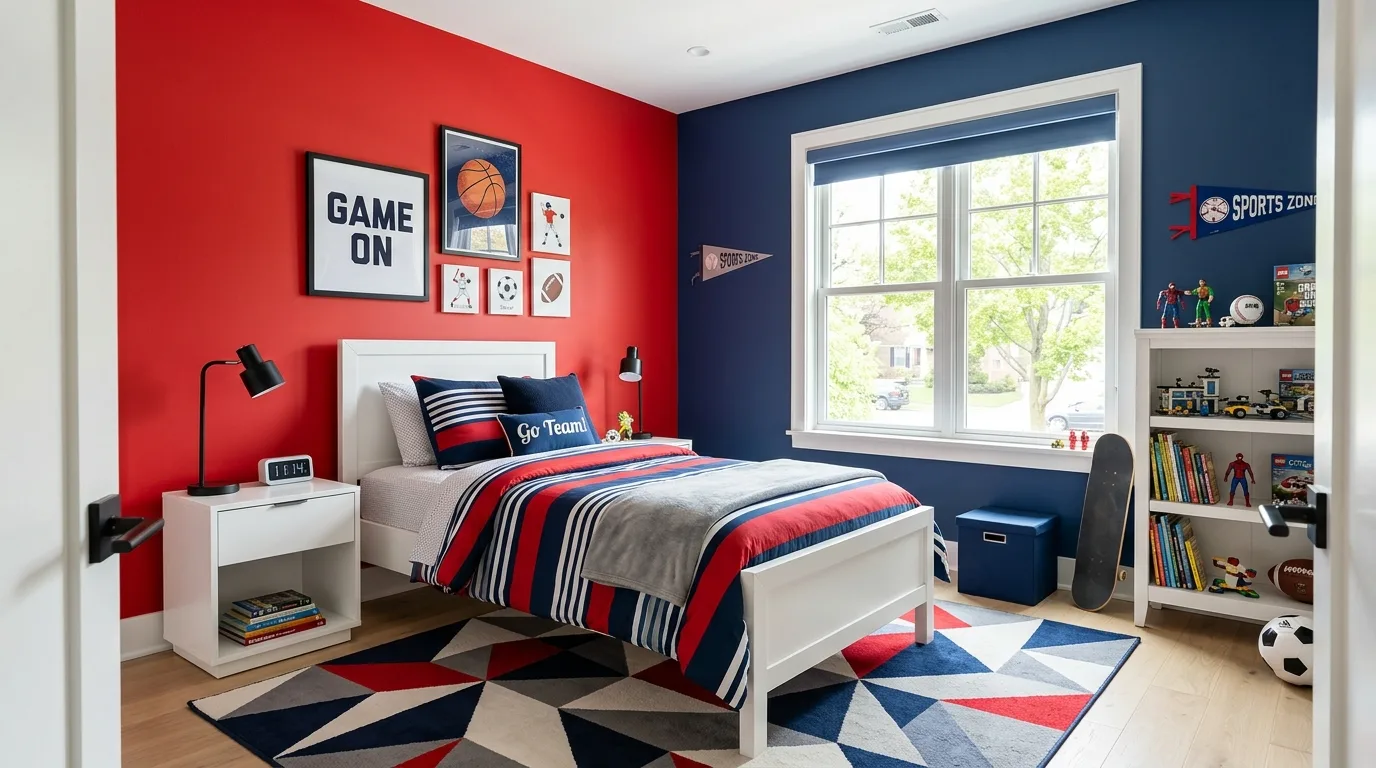
Color-blocked walls are a great way to make a boys bedroom feel creative and personal. Red and blue sections instantly energize the room, especially when the furniture and storage are kept simple enough to let the paint do the heavy lifting.
This approach feels even better when the lines are crisp and the rest of the decor repeats the palette in smaller ways. A striped rug or two-tone bedding can tie everything together without making the design feel overdone.
3. Sports-Inspired Without Feeling Themed
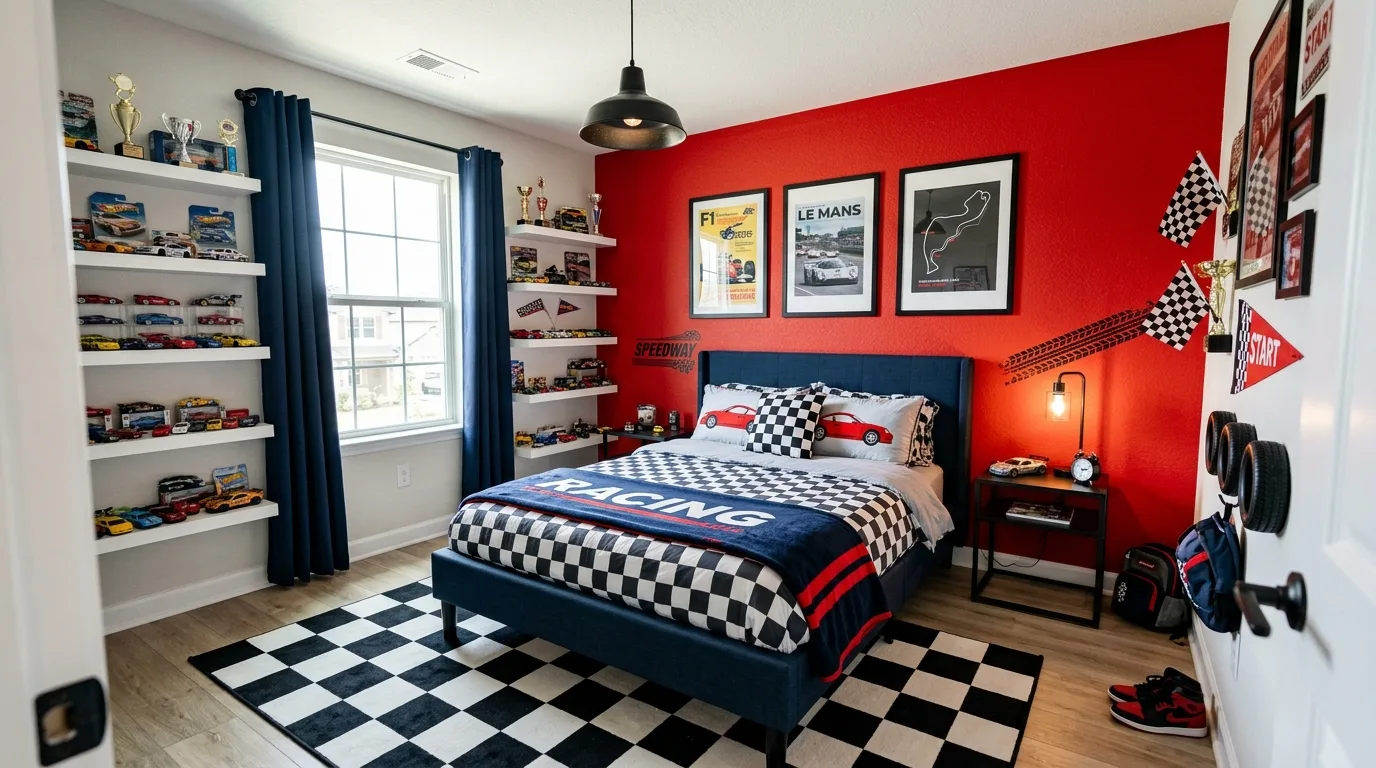
A sports-inspired bedroom can still feel stylish if the red and blue are used with restraint. Instead of filling the room with logos, focus on strong color through pillows, bedding, and graphic wall art that suggests movement and excitement.
That keeps the design flexible and much easier to update later. The room still captures playful energy, but it does so in a way that feels more thoughtful and less like a temporary theme.
4. Primary Colors Softened With White
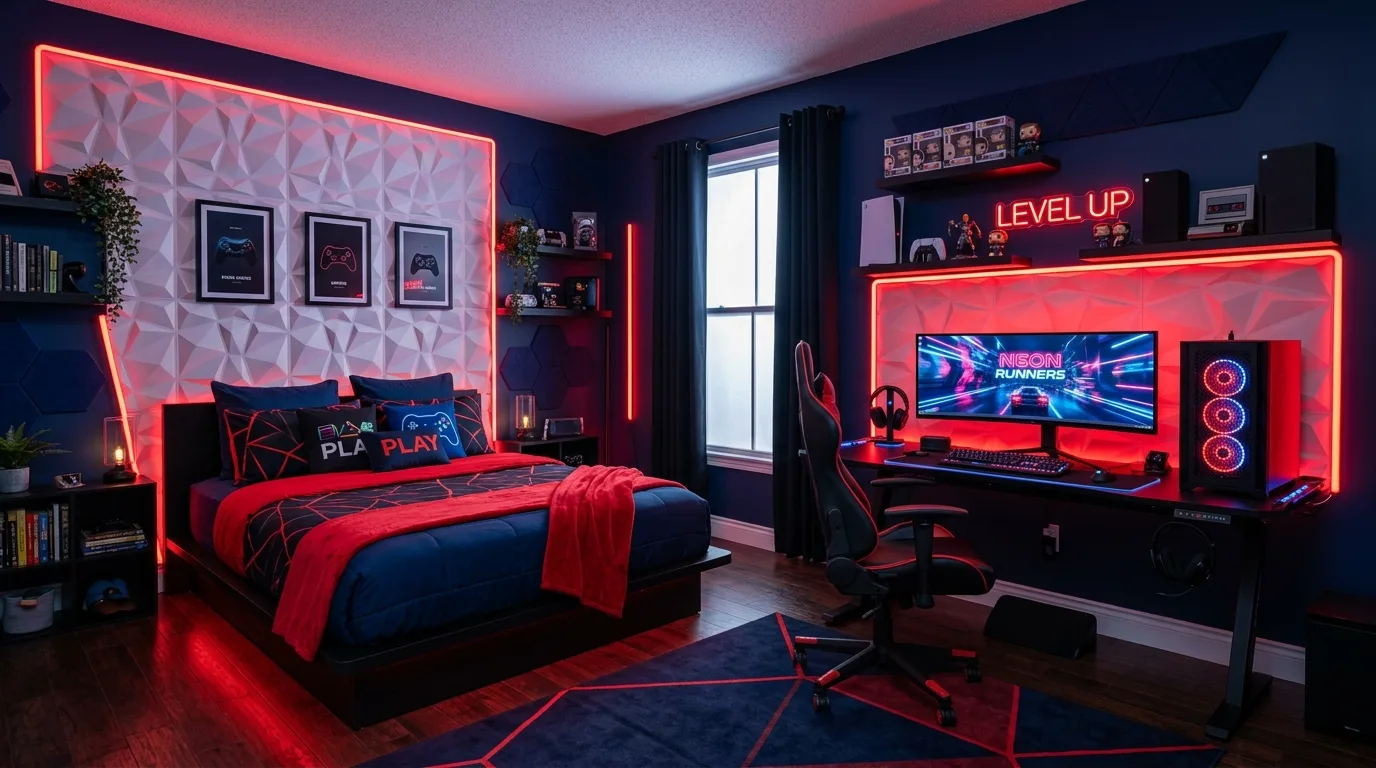
White is an important helper when working with bold primary colors. It gives the eye places to rest and keeps red and blue from competing too aggressively, especially in a smaller bedroom that needs to feel open.
With white in the mix, the brighter tones feel cheerful rather than overwhelming. It also allows fun accessories, posters, and books to become part of the design without making the space feel visually crowded.
5. Nautical Red and Blue With Clean Lines
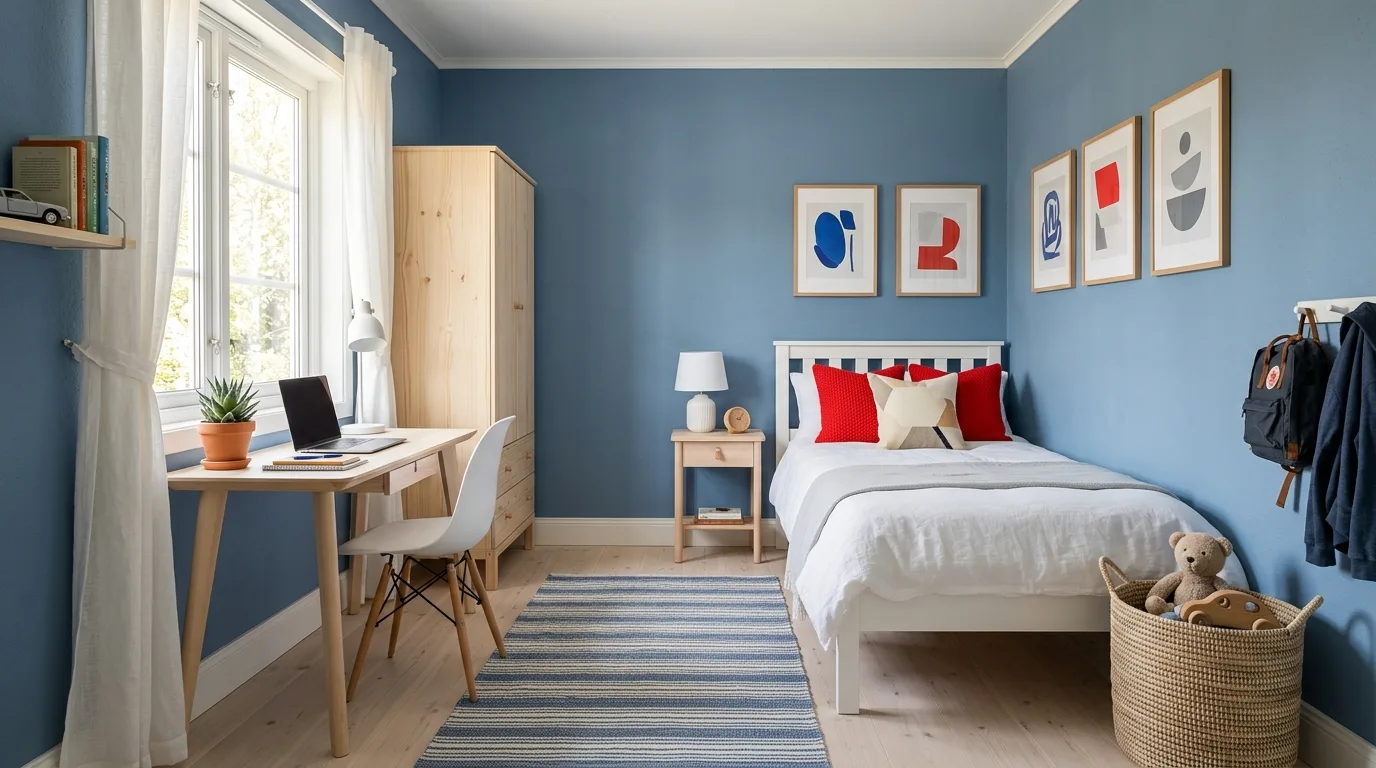
A nautical take on red and blue feels playful yet timeless, especially when the room includes stripes, white trim, and simple wood furniture. The result has a sense of energy, but it also feels neat and intentional rather than chaotic.
This direction works well because the pattern language is already familiar and structured. Even small details like a striped blanket or anchor-toned artwork can reinforce the idea without turning the space into a costume.
6. Bold Bedding in a Simple Room
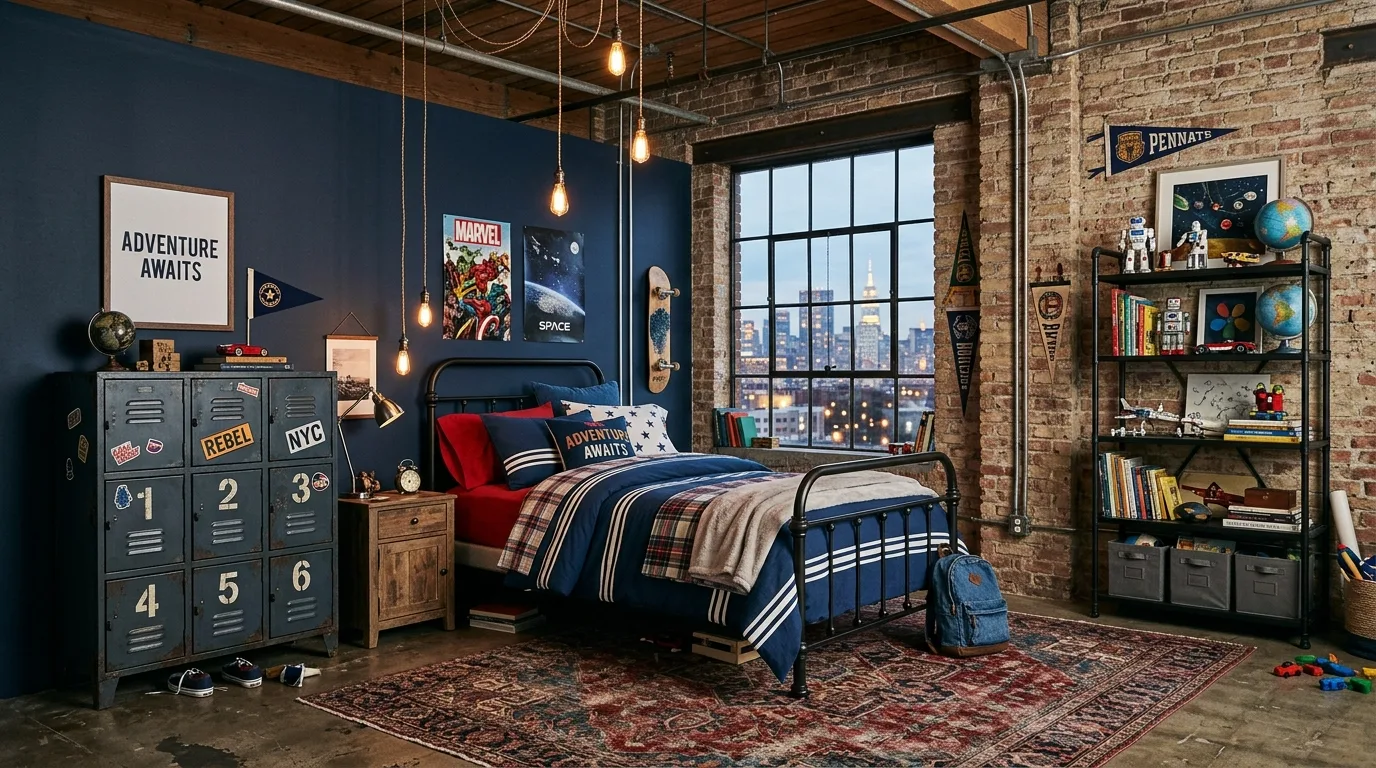
If you want the easiest version of this palette, let the bedding carry most of the color. Red and blue duvets, pillows, and throws can create plenty of fun energy while the walls and furniture stay simple and easy to live with.
This is a practical choice because bedding can change with age and interests. The room still feels dynamic now, but it can evolve later without needing a full repaint or major furniture swap.
7. Blue Walls With Red Storage Details
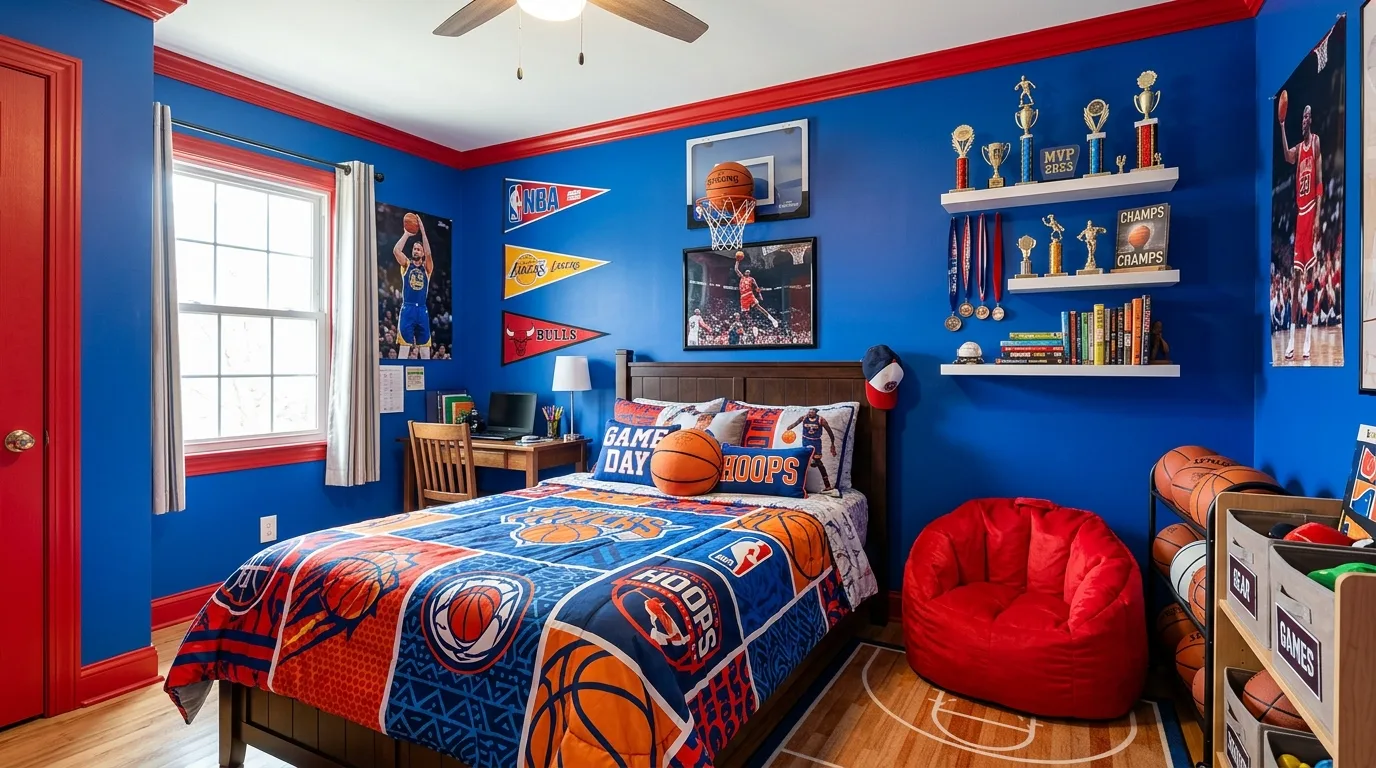
Blue walls create a calmer base, while red storage details add playfulness in a useful, practical way. Bins, hooks, stools, or shelves in red can bring energy into the room without making it feel like every corner is shouting for attention.
That balance is important in a kid's room because the space already contains books, toys, and daily clutter. When the color is built into functional pieces, the room feels lively while still staying manageable.
8. Graphic Rugs and Wall Art for Motion
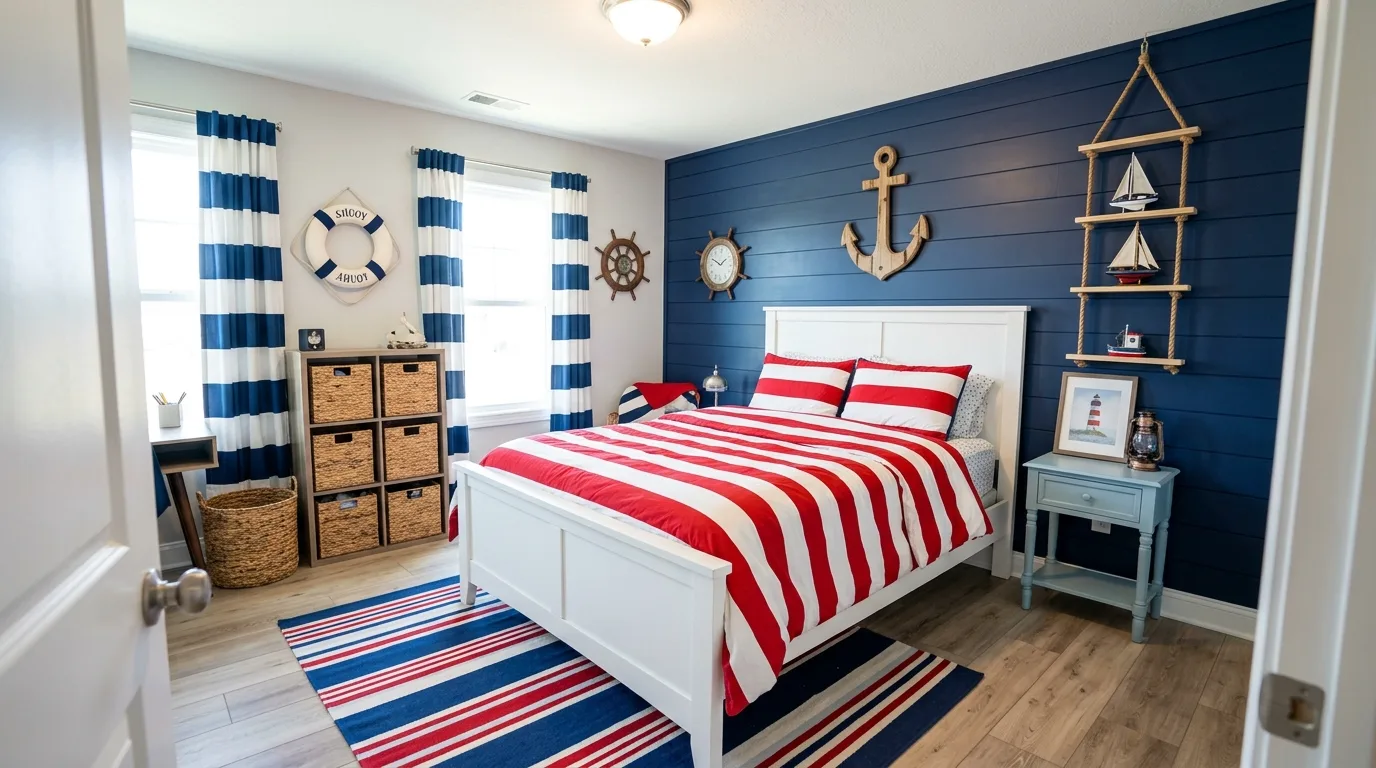
Graphic rugs and wall art are a smart way to make a red-and-blue room feel active and imaginative. They suggest movement and personality, which is especially effective for bedrooms designed around creativity, games, or after-school play.
Because those elements are easy to swap, they also offer flexibility. The room can keep its core palette while the accessories shift over time to reflect new interests and styles.
9. Muted Denim and Brick Red for a Grown-Up Twist
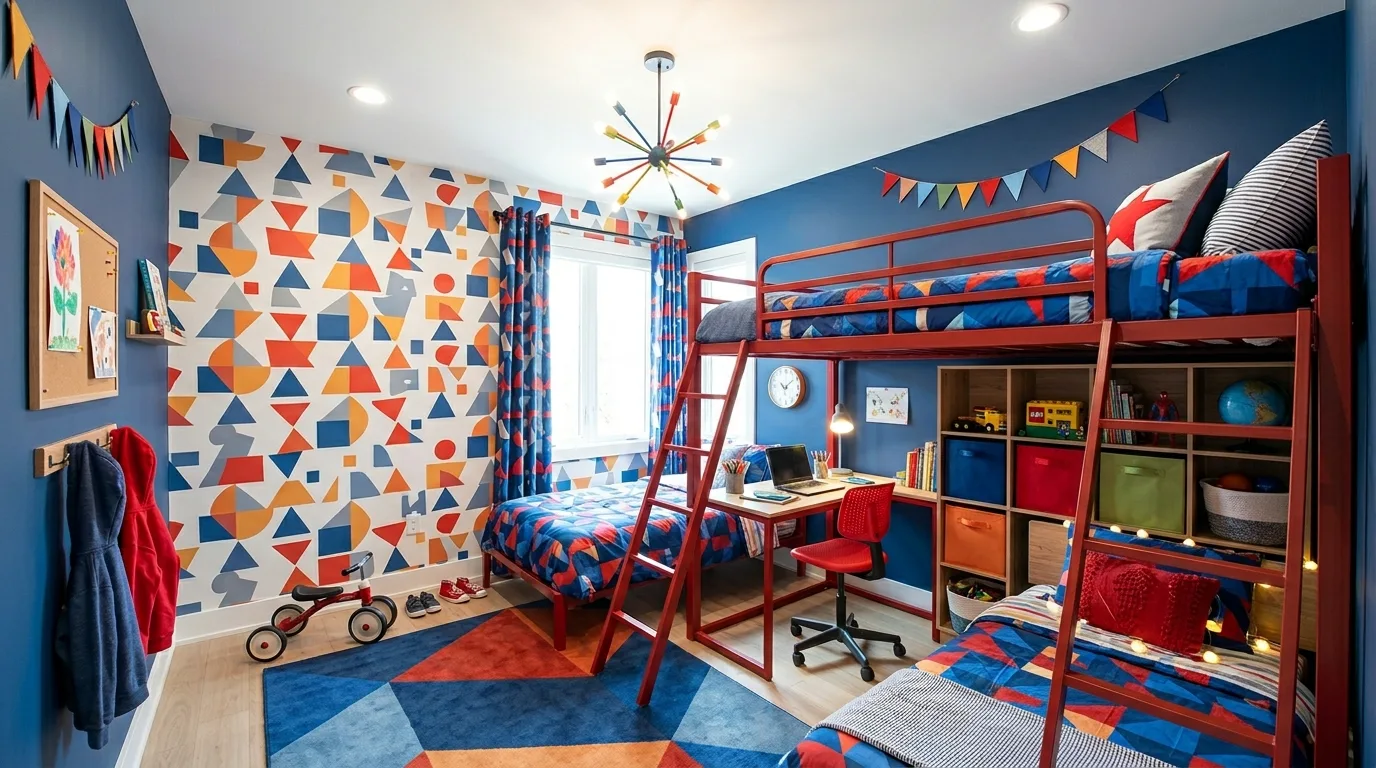
Muted denim and brick red offer a more mature version of the classic red-and-blue palette. The colors still feel fun, but they read softer and more grounded, which makes the room easier to grow with over time.
This approach is ideal when you want personality without the sharper brightness of primary tones. Natural wood, charcoal accents, and simple textiles all support the palette beautifully.
10. Loft Bed With Energetic Color Zones
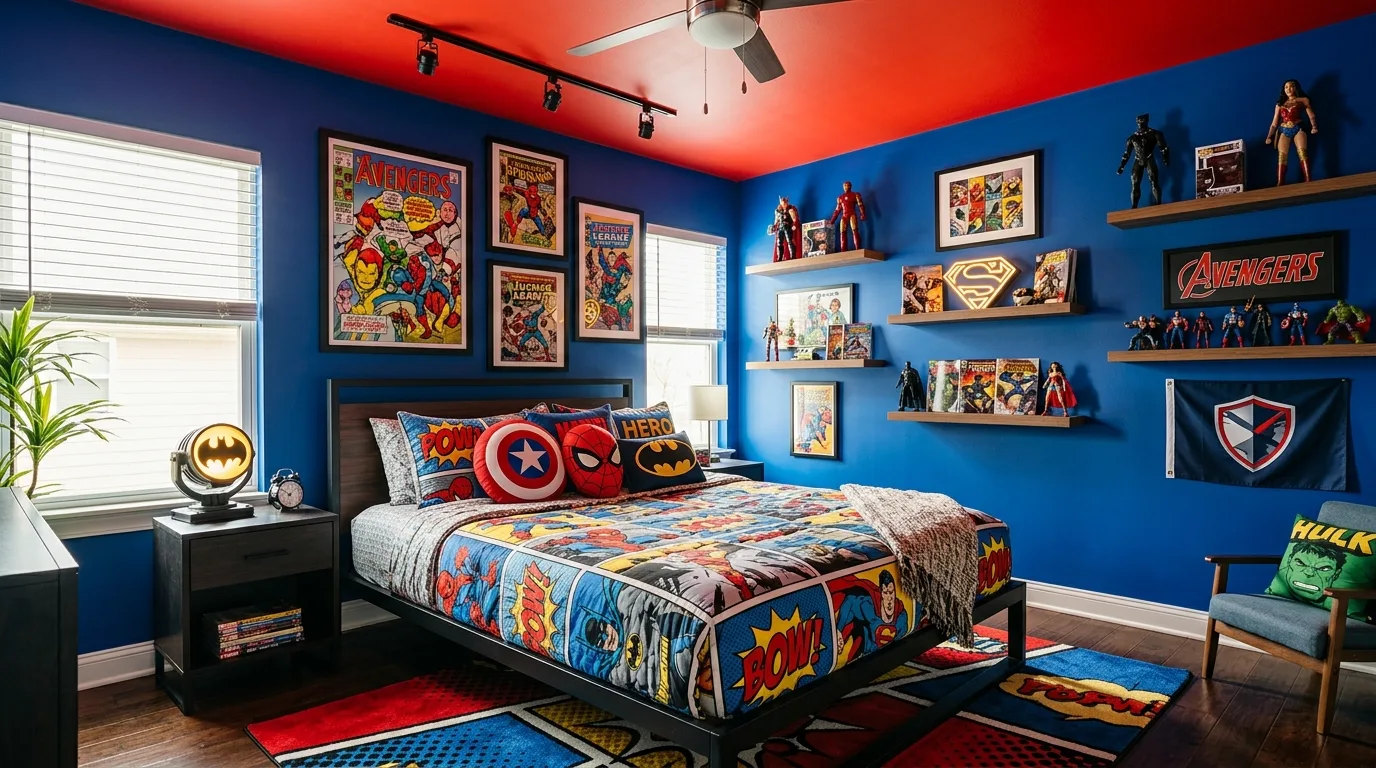
A loft bed creates natural opportunities for color zoning, with blue used in the sleep area and red adding excitement around the desk or play space below. That layout makes the room feel dynamic while still giving each part of the room a clear purpose.
Color zoning can also make a smaller bedroom feel smarter and better organized. Instead of random color, the palette starts to support how the room is actually used, which makes the whole design feel more intentional.